Story by Steve Frankham. All photos by the writer except when credited.
A timeless place
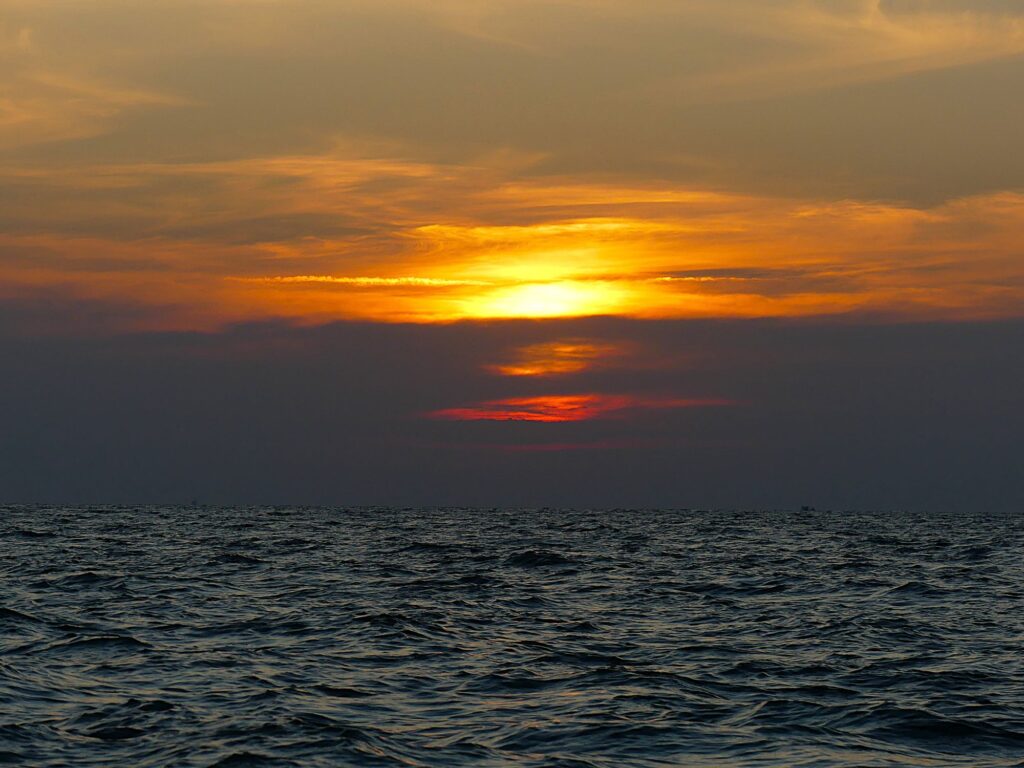
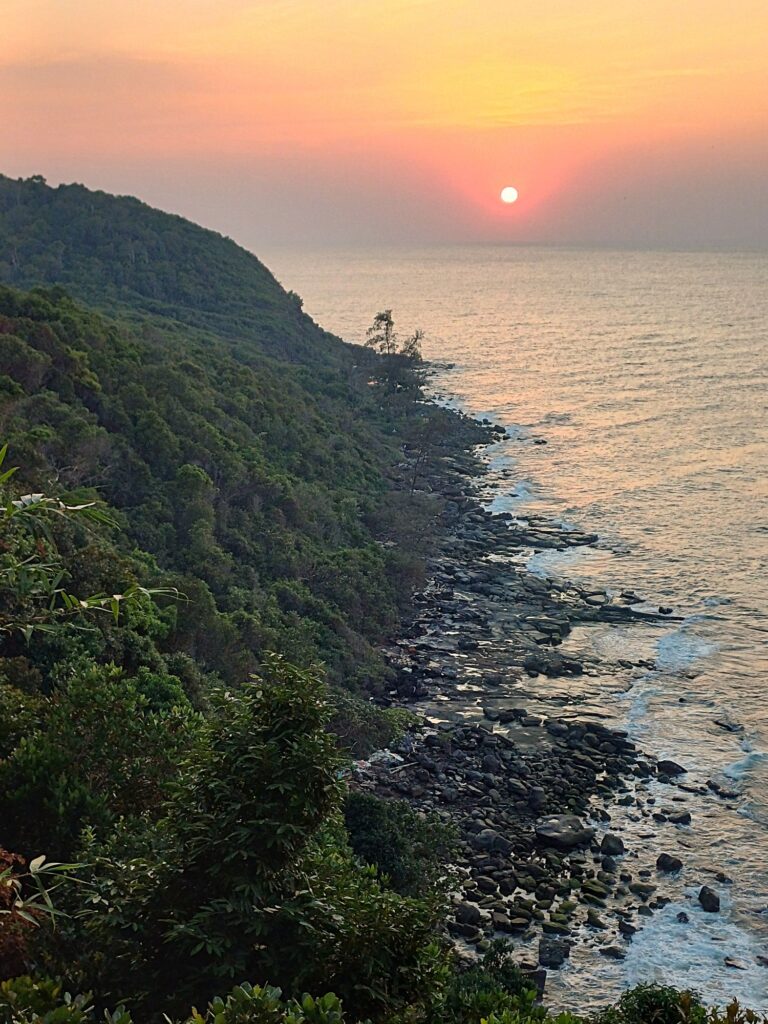
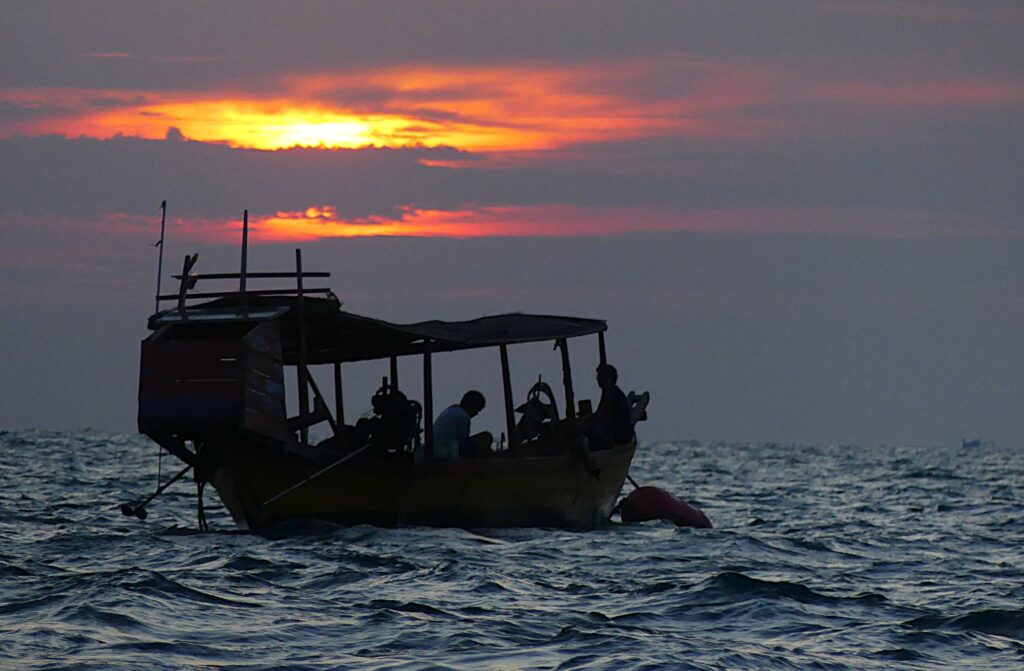
The sun was sinking into the waters of the Gulf of Thailand as we sailed back to the small hamlet of M’Pai Bay on the Island of Koh Rong Sanloem, Cambodia. We’d spent a languid day snorkelling, chilling, and chatting on the golden sands of Lazy Beach on the west coast of the island. I listened to the rhythmic hum of our small fishing boat’s engine, together with a small group of youthful backpackers. The gentle roll of the boat on the waves was calming, and I watched the island’s rugged, mountainous, jungle-clad slopes drift past, bathed in the yellow-orange glow of the sundown. Mighty strangler figs and kapok trees, hundreds of years old, stood proud of the forest canopy, cloaked in vines and epiphytes.
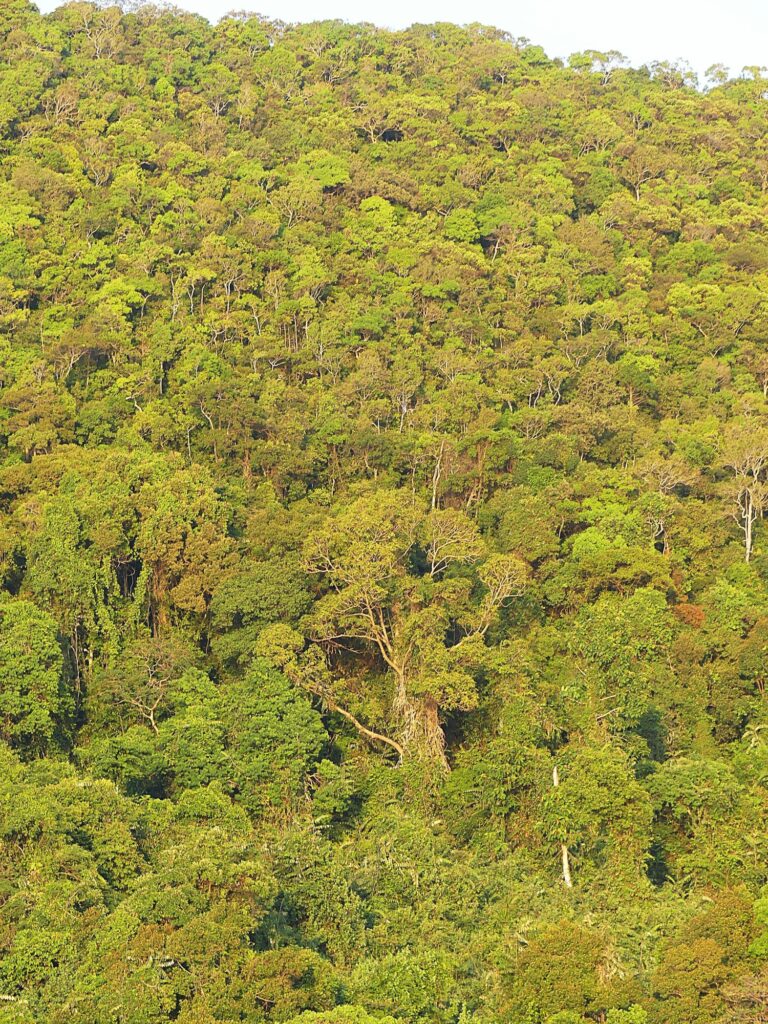
The thought occurred to me that the island looked exactly as it would have to the pirate or buccaneer sailing these coasts hundreds of years ago: a timeless place, but one now threatened like never before. This island should be preserved, a thing of beauty for future generations, but already the groundwork is being laid for its destruction in the form of an ill-conceived industrial-scale tourism development. In my view, this is nothing short of tragic. It is tragic for the local people who make their homes here, tragic for the rich wildlife of the island and the coral reefs that fringe its shores, and tragic for future visitors, who may never know the island’s wild beauty.
About a week before:
I arrived in Sihanoukville with low expectations. It had been a pleasant rural train ride from the low-rise, chilled-out Cambodian port town of Kampot, nestled between the Elephant Mountains and the Gulf of Thailand.
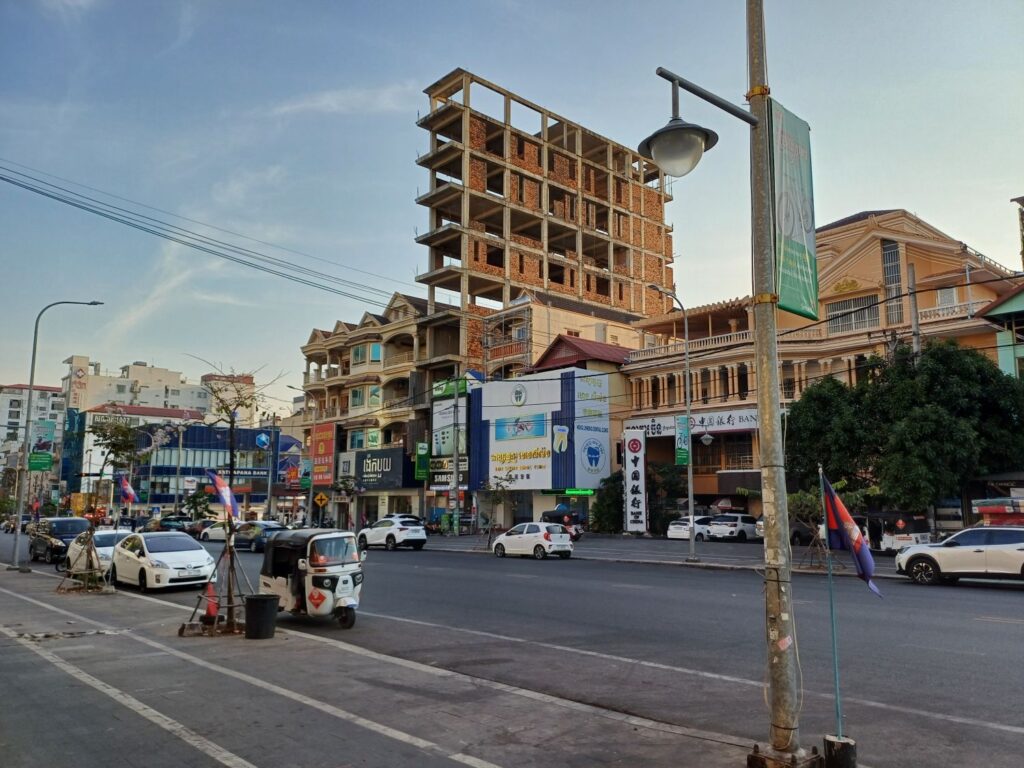
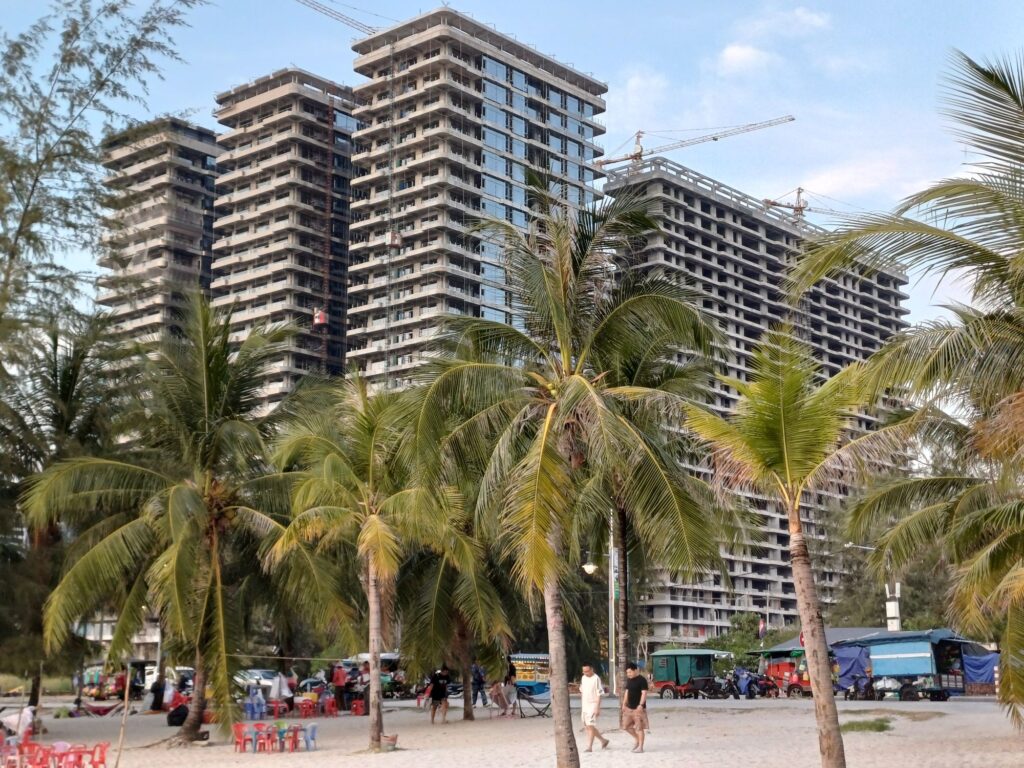
I knew that Sihanoukville had experienced a meteoric rise, from a modest seaside village a few decades ago, to a largely Chinese-financed mega resort on the Cambodian coast. Despite the low bar, on arrival, I was still stunned by the repulsiveness of the place – a forest of tasteless concrete towers, casinos, and resort hotels, marinated with plastic waste everywhere. The skyscrappers are surrounded by the tarps of construction workers living on the street, unable to afford a place to live on their meagre salaries. The city was a shitty dystopian blend of the Costa del Sol, Cancun, and Las Vegas, largely targeted at Chinese customers, who are banned from gambling in their home country.
Otres Beach
Grabbing a tuk tuk, I headed to a cheap Italian hotel in the area of Otres Beach. Otres was a spot which the guidebook stated still retained some low-rise ‘hippy charm’. Whatever ‘hippy charm’ there once was, it appeared the bulldozers had reached it sometime before my arrival. It now resembled one enormous, dust-choked building site. The remaining ‘low-rise’ backpacker places were surrounded by construction, with the skeletons of half-built megastructures stabbing into the air. According to the map, there were supposed to be some lakes around Otres, but I couldn’t find one. I assumed they’d been landfilled for more morbid real estate.
Fat Power
Seeking some positive vibes, I unpacked my gear and decided to take a walk down to the beach. I weaved my way past construction sites and bulldozers, onto the main drag that led to the beachfront. Passing some grotesque concrete hotels, I found some amusement in their names. One of these was the ‘Phat Power Hotel’. I imagined this was the pet project of some Chinese investor with a big ego and a reduced awareness of exactly how ridiculous the name sounded.
Those left behind
I peered into the gloomy spaces beneath tarps that cowered beneath the concrete high-rises, where local people cooked and slept. Somebody was making big bucks here, but it didn’t look like that money was going to the Cambodian people, the people who must keep this town ticking over. ‘Trickle down’ economics working with usual efficiency, I thought grimly.
Plastic for company
The beach, though formed of beautifully white sand, was no great shakes either, backed by a noisy seafront road. I thought of going for a swim, only to find the sea so shallow that I could hardly float. Plastic bottles bobbed past me, keeping me company. I resolved to escape as fast as possible.
Escape
The following day, I was on a fast ferry to one of the bay’s islands, highly recommended by friends, the laidback island of Koh Rong Sanloem. The spiky concrete skyline of Sihanoukville shrank into the distance as we sped out across the bay.
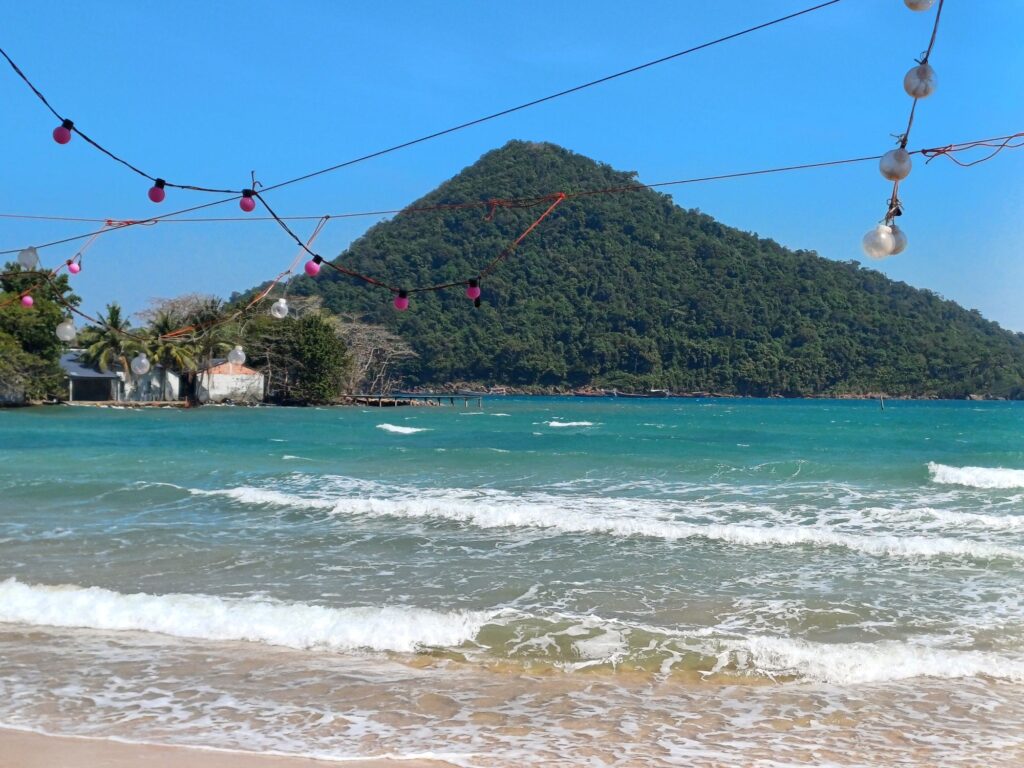
The sea was choppy, with a strong wind blowing from the east, and we bounced across the waves. Within an hour, we approached the island. Emerald, jungle-clad hills rose from the sea, with a few small, low-rise resorts scattered around the spectacular white sand arc of Saracen Bay. I exhaled a sigh of relief, reassured that the island had not yet been scarred by the kind of development I’d witnessed in Sihanoukville. Not yet; but signs of the island’s impending fate were visible even from the boat.
We left Saracen Bay behind and headed towards the mountainous north of the island. An ugly scar of deforestation was visible in the hills above Bottle Bay, an area brutally ‘clear-cut’ to make way for a large-scale resort. Was that necessary? The beauty of any resort on an island like this is surely to blend in and work with nature, rather than steamroll it.
M’Pai Bay
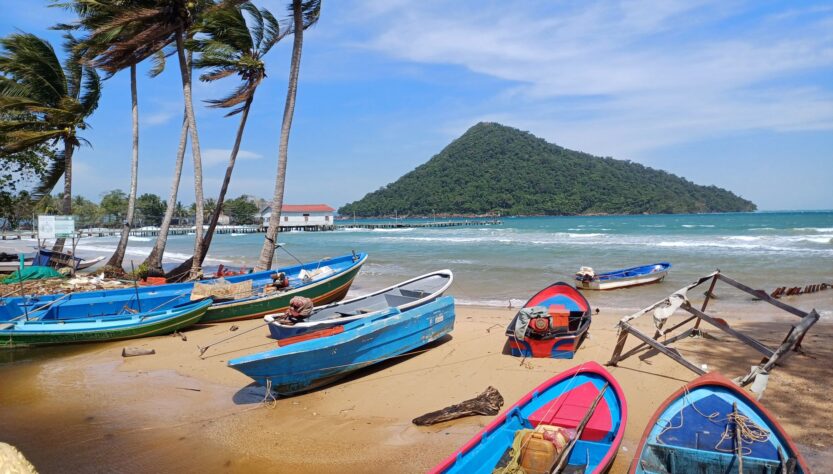
We turned the corner around the peninsula, heading towards the tiny hamlet of M’Pai Bay, the island’s only real village. It’s a lovely spot. A few low-rise buildings and a palm-fringed beach face out towards the steep pyramid peak of Koh Koun Island. Getting off the boat and wandering down the pier, I instantly felt myself relax. Facing onto the pier is the village’s one and only ‘road’. It runs for a couple of hundred meters before petering out into a dirt track. There’s no traffic here, because essentially there’s nowhere to go; the village is hemmed in by the dense forest of the island on every side. Dogs, cats, and chickens lazed around, unaware of the dangers of anything on two wheels or four.
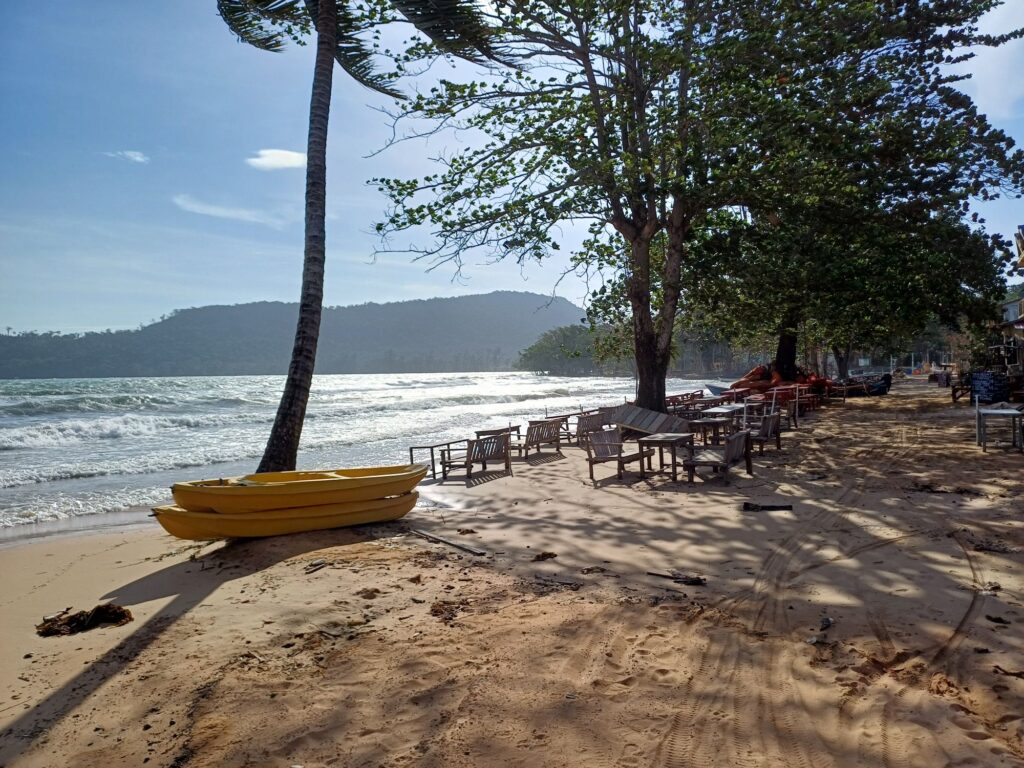
I checked myself into the cheap and super mellow Macondo M’pai Bay Guest House, run by the very easy-going Chinese girl, renowned for her dumpling-making classes.
Island vibes
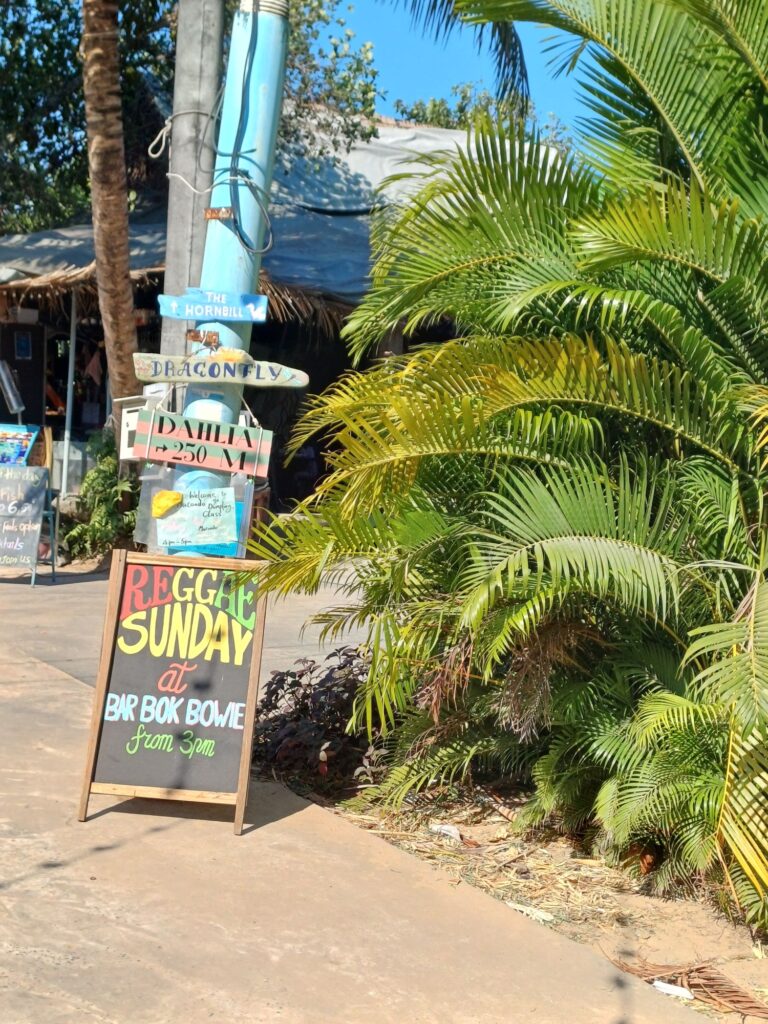
Over the next few days, I found myself settling into island life. I wandered down to the sea front for a coffee and breakfast, ambled along the beach for a swim, and engaged in a bit of body surfing, made possible by the fierce easterly winds whipping up the waves. Some of the cafés and restaurants in the village are owned by foreigners, some by locals. Regardless of ownership, everyone seemed to benefit from this laid-back tourism. Local fisherman rent out their boats to backpackers to take them to local snorkelling spots or other beaches on the island. People work to their own rhythm.
Moves towards sustainability
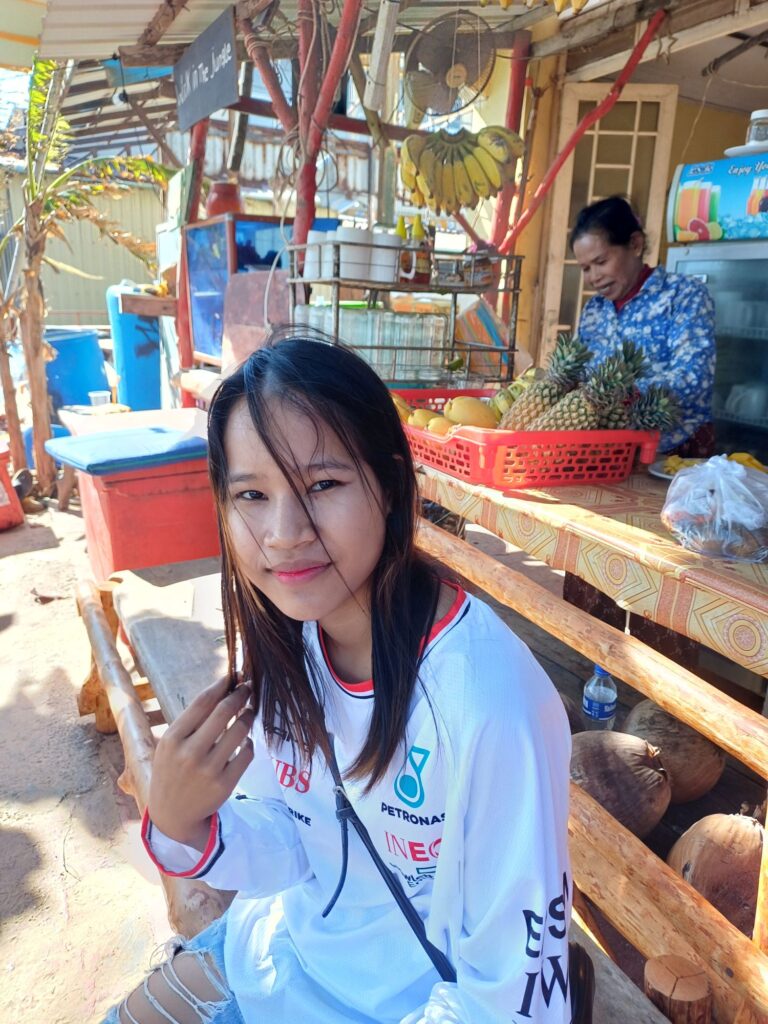
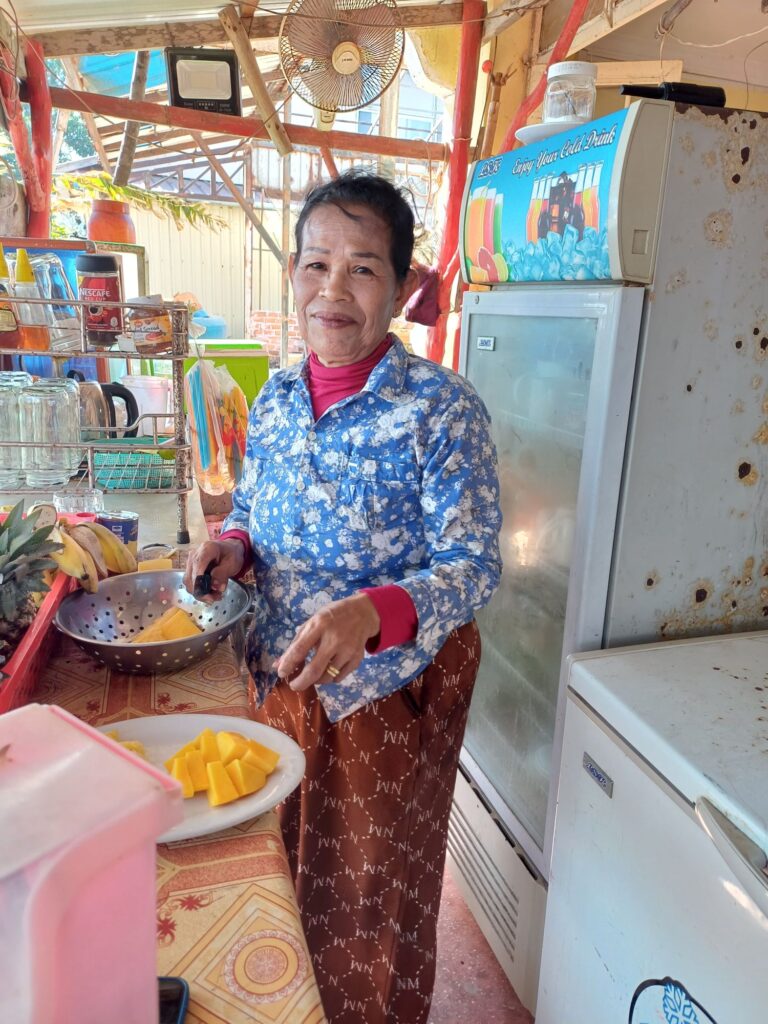
One of my favourite spots was a palm-shaded restaurant/café on the beach, owned by an older local lady and her daughter. They offered delicious smoothies, served in cups, with metal reusable straws. I was more than happy to endorse this attempt at sustainability. Plastic washing up on the beach, both from Sihanoukville and elsewhere, is a titanic problem. To counter this the local villagers arrange regular beach clean-ups to fight the worst of it. The family was immensely friendly and welcoming, as is often the case in Asia, so within a couple of days, I felt like family. I lost count of the number of dragon fruit and mango shakes I got through…

The island’s spell
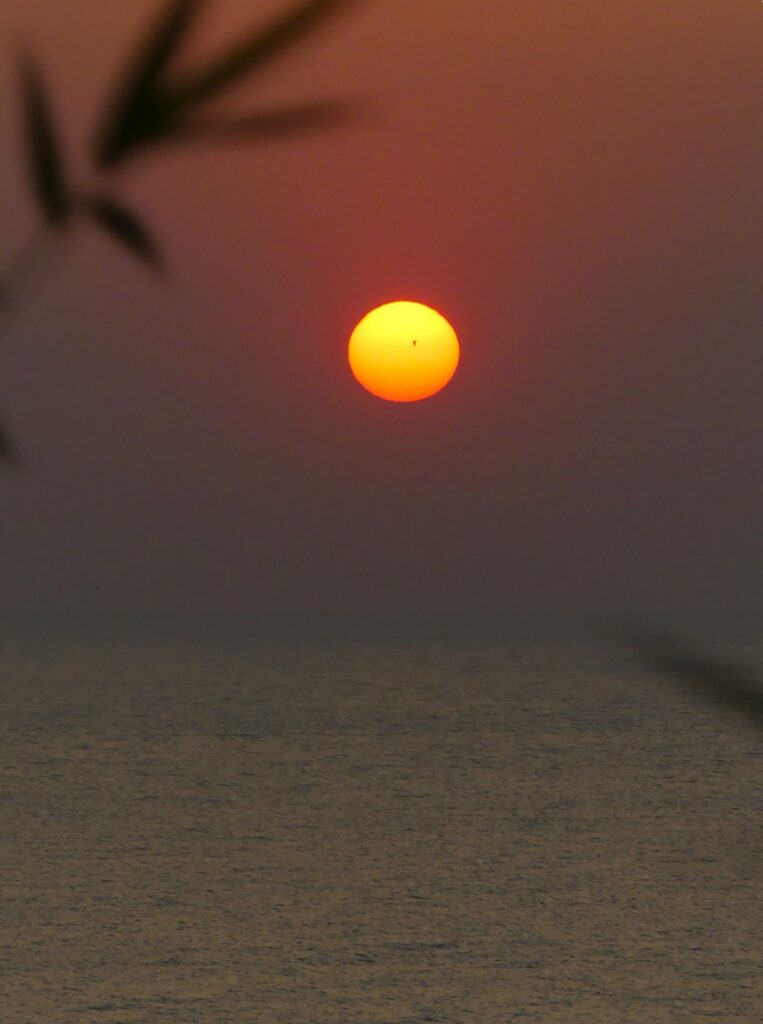
Island life like this also seems to have an almost magical effect on visitors. People, wound up, suspicious and tense from the stresses of the modern world, loosen up. Smiles become easier, and conversations with strangers are casually struck up. Most evenings I found myself in the company of friendly strangers, watching the sun melt slowly into the ocean.
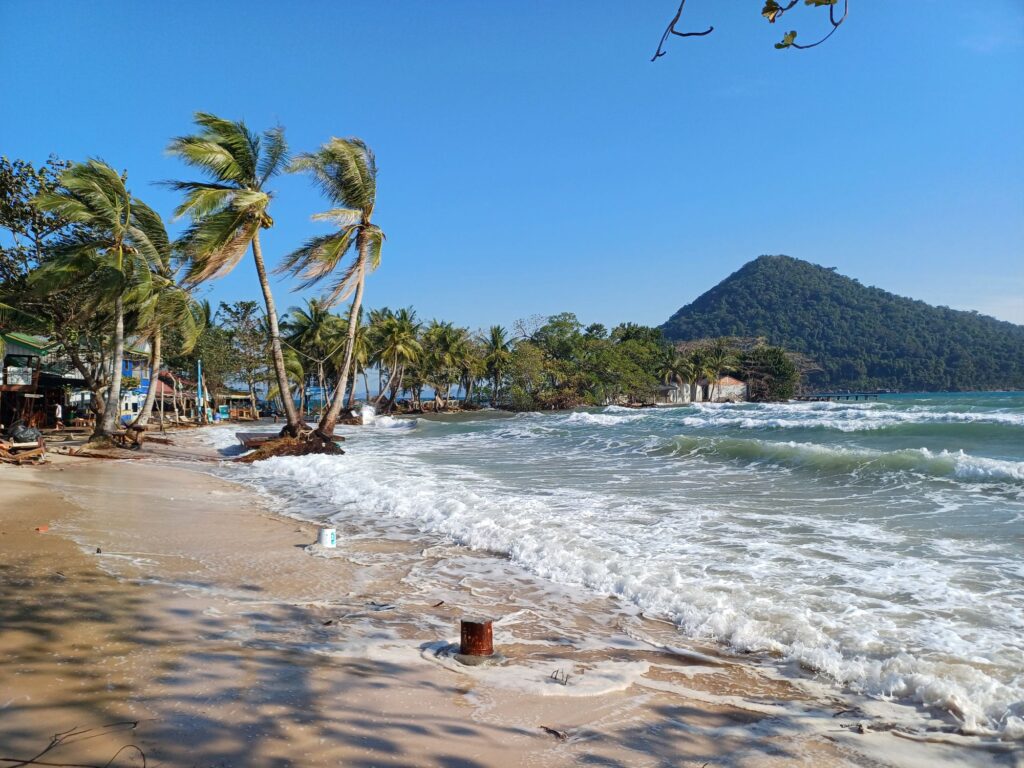
Marooned in Paradise
For several days, the island was essentially cut off due to high winds and dangerous swells, making docking ferries or supply boats impossible.
Being ‘Robinson Crusoed’ on an island like this forces people to think about time and life differently. The schedules and rush of life are totally negated if you physically can’t leave. The only remaining option is chill back, enjoy life, good company, and the natural beauty of island. With the majority of it’s land still covereed in dense rainforest, the wild still thrives on Sanloem. One evening, wandering back from a café, I was suprised by a pair of magnificent, and highly endangered Great Hornbills as the flapped noisily through the trees. The sight of such endangared birds is a sure sign of the forests continued ecological health.
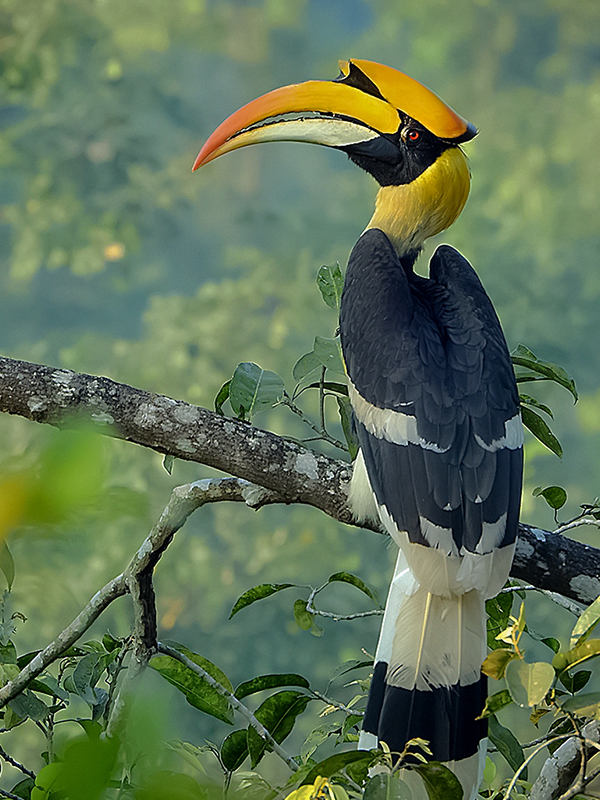
An Endangered Land
Yet all this is in danger. Almost the entire island has been sold off by the government to two major tourism development corporations. One is the partially Japanese-owned Emario Shonan Marine Corporation, granted 1124 hectares, the other being Koh Rong Sanloem Island Resorts, which has been granted 1066 hectares. To give this some perspective, the island’s total area is 2450 hectares. Both companies have close connections to the government, with plans for the construction of major high-end resorts. None of this has taken place with any consultation or consideration of the local community, or small businesses, many of whom have lived on the island their entire lives.
The exact development plans are seemingly impossible to come by, if they even exist. This is no surprise, given the secretive nature of the two companies. While on Sanloem, I heard of a proposal to build a golf course on the island. Whether this is true or not, it’s hardly beyond imagination. Sanloem’s ‘sister’ island to the north, Koh Rong, is having an international airport carved across its centre, together with golf course developments, and a specified ‘Casino Zone.’
Evicted
Meanwhile, back on Sanloem, an ugly road has been bulldozed across the middle of the island, connecting Saracen Bay to Lazy Beach. This is part of a plan to build 60km of concrete roads on an island only 10km in length. Starting at the beginning of 2023, local families and tourism businesses have been forcibly evicted from their land. They did not receive compensation from the government – just an order to leave homes and businesses that, according to the administration, they never owned.
Having lived in the Amazon Basin, I’m all too aware how the lands of Indigenous Peoples are routinely sold off to oil and mining operations against their will, despite having inhabited that land for centuries. It’s the same story, with the same injustice, just in a different country.
Development Sweeps Koh Rong Sanloem Amid Government Secrecy
An article from Voice of Democracy newspaper. The Newspaper was shut down by the government two years ago.
A vision of the future?
On a more local level, this recalls the development of the ‘protected area’ of Botum Sokor National Park on the mainland coast. Botum Sokor is only 30km north of Sanloem. A large part of the National Park was sold to the Union Development Group in 2014. 1,333 families, mainly reliant on fishing and agriculture, were forcibly evicted from their land to make way for a huge tourism development. If they refused to leave, their houses were bulldozed or burnt down, and no practical compensation was given. All of this took place in a ‘National Park’. This is a pattern that has been repeated throughout Cambodia in recent years. Is this a vision of the future for Sanloem?
An additional link to a Guardian article on land grabs in Cambodia below:
In the interest of the people?
All of this is all being done under the guise of ‘economic growth’, but who stands to benefit? Certainly not the local people. Perhaps the resorts might bring some jobs, but most will be poorly paid, and the profits will all disappear overseas or to the government-connected ‘elite’. Currently, money flows to local families and businesses, people who have a long-term interest in their island home and its preservation.
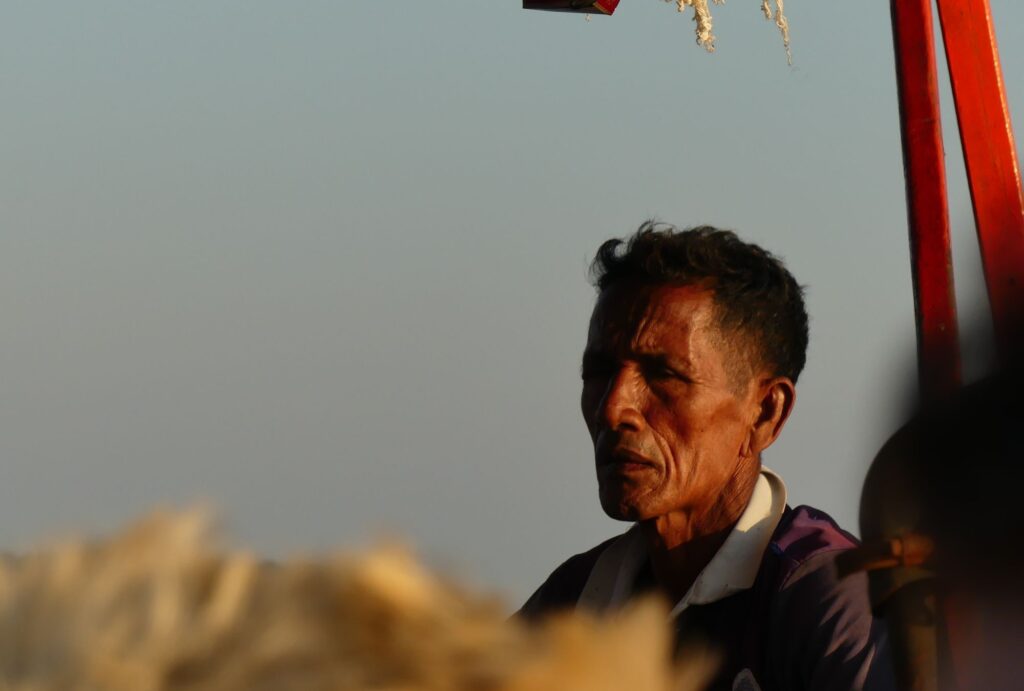
My fear is that the local people will no longer have a say in their future, like the impoverished families living under tarps in Sihanoukville. I fear that the precious local environment, the island’s wildlife-rich rainforests, will be felled, and the coral reefs suffocated by the sewage, waste and runoff from these thoughtless developments.
A corruption of power
All of this is overseen by the Cambodian government, which is essentially a dictatorship. The current administration is well known for silencing opposition. An example of this is the imprisonment of environmental campaigners, such as several members of the local NGO, Mother Nature Cambodia. Five members of the organisation were imprisoned last year under the charge of ‘plotting against the state’ – in other words, disagreeing with the government and its decisions.
To find out more about Mother Nature Cambodia click:
https://mothernaturecambodia.org
The people I talked to on Sanloem were universally opposed to the development of the island, but were fearful of the consequences of speaking out or voicing their opinions. In 2023, the Cambodian government shutdown of one of the country’s last critical media organisations, Cambodia’s VOD (Voice of Democracy) Newspaper. It’s clear that free speech has been systemically silenced.
A link to a BBC report on the silencing of free speech in Cambodia:
Cambodia’s Hun Sen shuts down independent media outlet Voice of Democracy
During my time in Cambodia and speaking to local people, I became increasingly convinced that the current administration has no interest in helping the population of their country. Their only interest is enriching themselves with multi-million dollar payoffs. This is so wrong, so unfair, it left me feeling sick to my stomach.
For the many or the few?
I’m sure that many of the residents of Koh Rong Sanloem feel their lives are far from perfect. Everyone needs to make a living, but this can be done sustainably, in a way that benefits the many, or it can be done destructively, to benefit the ultra-rich, and to essentially enslave the poor. The latter is happening in Cambodia.
All of this leads me back to that day I spent on Lazy Beach, snorkelling and swimming in a place of timeless beauty, but knowing that the sands in the hourglass for Koh Rong Sanloem are fast slipping away.
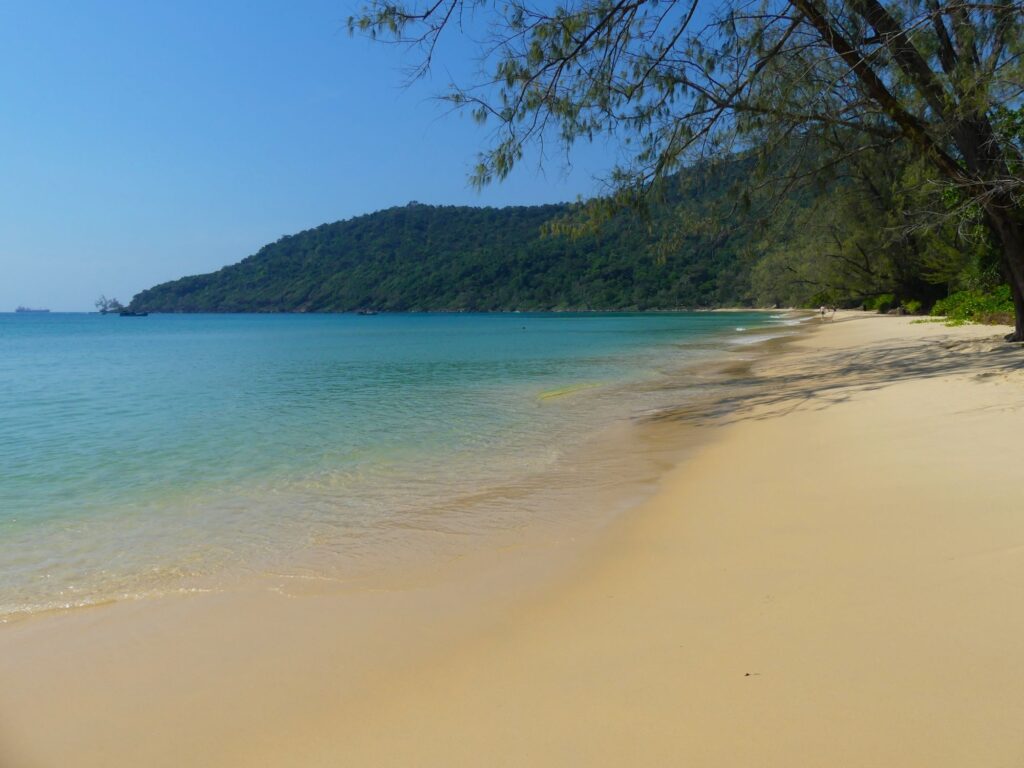
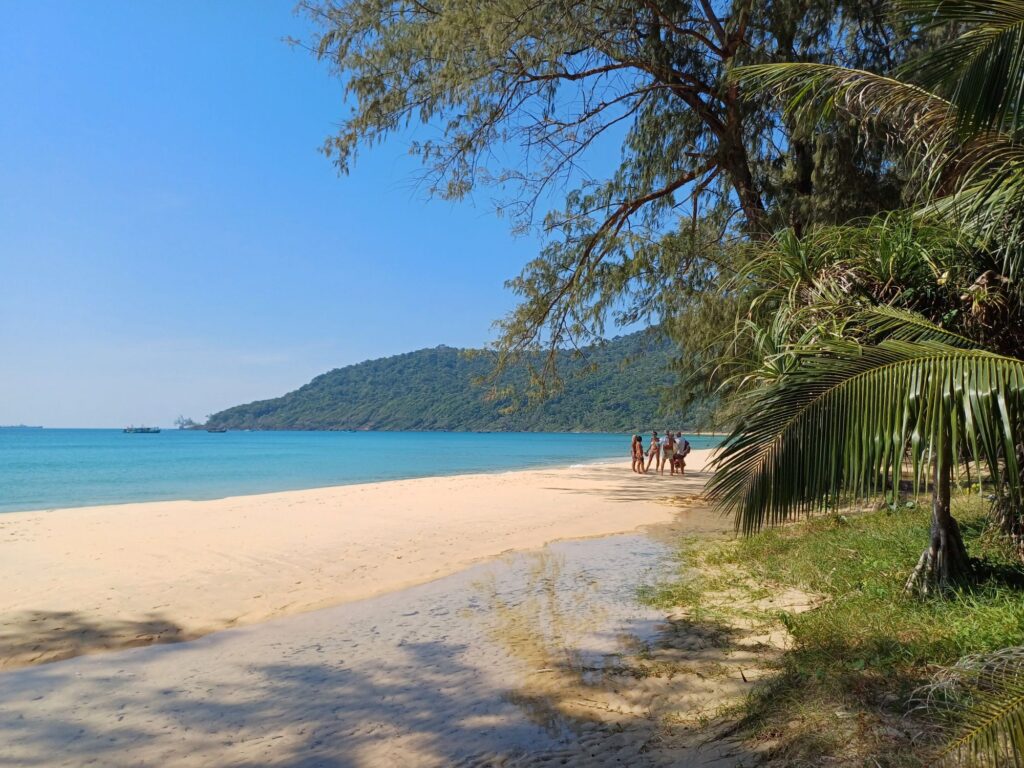
Hope for the future?
The following day, I left. I watched the island slip away behind me. I wished I could stay longer, but my time in Cambodia was coming to an end.
My desire is that locals find a way to halt this destructive development, to save their beautiful island, and to protect it for future generations. I fear for Koh Rong Sanloem and its future. The island will forever have a place in my heart. I just hope it survives the challenges facing it today.
Bless your heart for spreding awarness mister. And i wait for another story of your grand tales
-Han